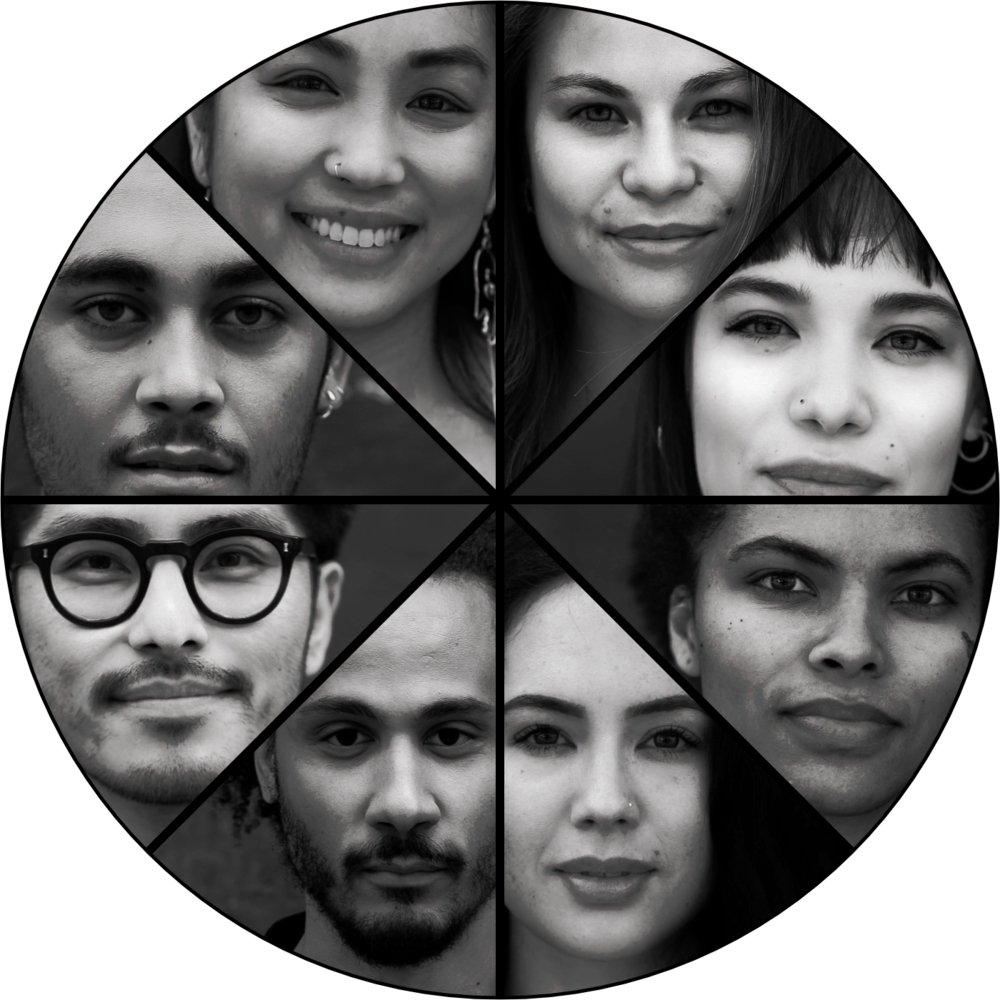
Dutch | Zambian
The racism I experienced when I was younger was difficult to put into words. Since then, I have often felt guarded, which can be exhausting. Learning to stand up for myself and allowing myself to express anger instead of bottling it up has helped me navigate daily life.
Looking back, I now understand how my dad felt. Leaving Zambia was a big culture shock for him, and my mum, although she tried her best, could never really understand what this was like. As I grew older, I started to understand the feeling of not belonging because of how people treated me differently because of my skin colour. I made myself smaller to fit in and to feel in place, an experience we share, just in different generations.
Turning pain into purpose, I now work at an anti-discrimination office, so my daily work-life revolves around fighting for equal treatment for all people. I have accepted that my feeling of not belonging will probably always stay, because it is strongly connected to how others see me. But I have so much joy in embracing both sides of myself, and I feel a deep sense of belonging when I share this with other people of mixed backgrounds. I love the poem “Our Deepest Fear” by Marianne Williamson. I interpret it as a message to the next generation: you can achieve anything you put your mind to, and by shining your light, you inspire others to do the same.
I am closer to Dutch culture because that is where I spent most of my upbringing, but during my studies I started seeking balance because I wanted to feel connected to my Zambian heritage too. I learned to cook a traditional Zambian dish and listen to Zamrock bands. I even went to a concert with my mum to see a popular Zamrock band. I am now planning to visit Zambia with my own children. I feel connected to both cultures and have made them my own. The first time a stranger blatantly called me a name because of my skin colour, I was a teenager in a supermarket with a classmate. Nobody said anything, and even later, when I told white adults, they did not fully understand the impact it had on me. I felt ashamed, angry, distraught and disappointed. Since then, I have often felt guarded, which can be exhausting.
Now I feel that I matter and that I bring something to the table that no one else can. I have accepted that the feeling of not fully belonging may always stay, because it is often connected to how others see me. But I have so much joy in embracing both sides of myself, and sharing that with other people of mixed backgrounds gives me a deep sense of belonging. I work at an anti-discrimination office, where my daily work revolves around fighting for equal treatment for all people. I have never hidden parts of my identity, and I am proud to say I am mixed Zambian-Dutch. I do not appreciate being called “half-blood,” exotic, tropical or strong because of my African descent. I am a full person. And I want the next generation to know that they can achieve anything they put their minds to by shining their light.
Speaking of inspiration. I have an older friend, who has the wisdom of a thousand lives and the warmth of a thousand suns. She fled her home country, made a life for herself and her children from scratch, kept pushing when things were rough and still manages to be a positive, warm and kind person. She inspires me as a mother, entrepreneur and friend.