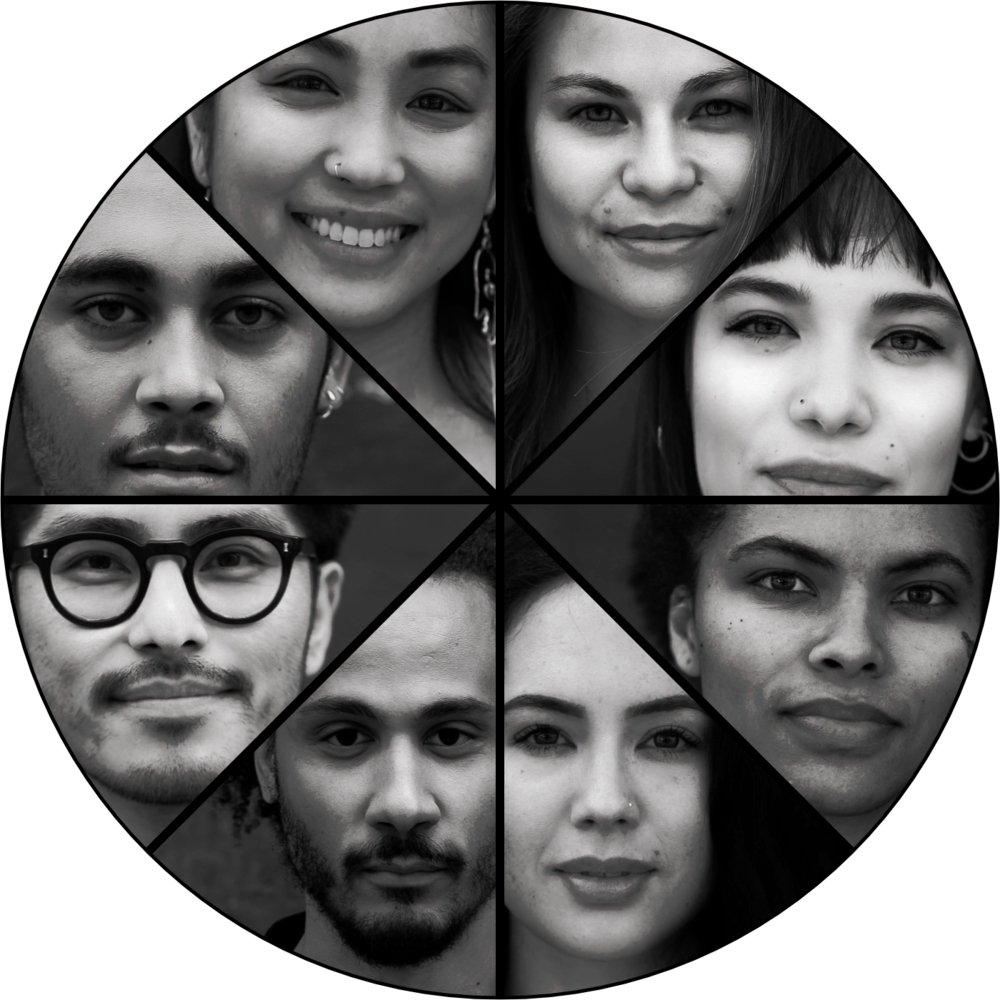
Dutch | Senegalese
I identify as a Senegalese-Dutch bisexual individual currently living in London. For a long time, so much of my energy went into understanding and navigating my multi-ethnic, biracial identity that there was little space left to explore these other parts of myself. It was not really about wanting to hide; it was more about survival, about trying to belong and make sense of myself in a world that often prefers clear categories.
People have always perceived me differently depending on where I was. When I lived with my mother in West Africa, people often called me métisse which roughly means “mixed” or “half-caste” or even “white.” I was clearly not seen as Black, yet I never felt white either. I didn’t really fit into either box. Even my close friends never really acknowledged me as “Black.”
For a long time, I’ve felt closer to the Dutch side of my culture. But it’s also created a kind of longing for my Senegalese side, a feeling that something was missing or incomplete. When I finally went back to Senegal at 18, I could clearly feel that I hadn’t grown up within Senegalese culture. It was a strange and sometimes painful realisation, because there’s a deep part of me that longs to feel fully connected to my Senegalese roots. When I’m in Senegal, however, I often feel very European or specifically, very Dutch.
That feeling can be isolating at times, as though I’m standing between two worlds, never fully belonging to either. But it also pushes me to keep exploring and redefining what belonging means for me, finding home not just in a place, but in people, in dance, my art, and moments that reflect both sides of who I am.
It wasn’t until I moved to London that people began to address me directly as a Black woman. I still remember the first time a woman said to me, “You know, us, as Black women…” and I realised that no one had ever spoken to me like that before, even though that is part of my identity. Living in London has been deeply healing for me. I no longer feel like “the only one,” the way I sometimes did in the Netherlands. That sense of belonging has been incredibly empowering and comforting.
This constant adapting also became a default for me; a kind of “chameleon” way of existing, where I could blend in almost anywhere. Now I am learning that all these layers of who I am can coexist and that there is real beauty and power in that complexity. I would say that being mixed-race is a true strength. We are natural bridge-builders, creating connections between cultures, traditions, religions, and ways of life. Embracing this position, rather than seeing it as a challenge, is a true gift.