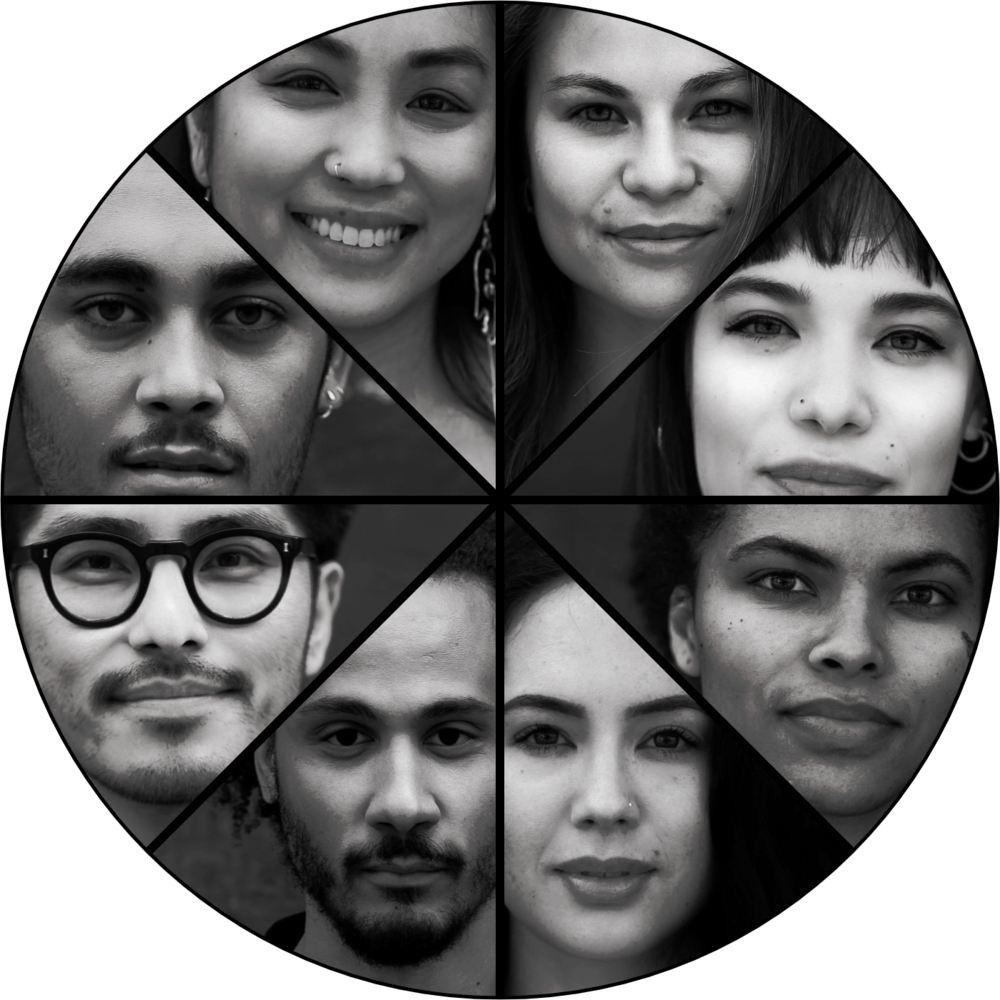
Luso-Indian (mixed Portuguese and Indian), Chinese, and Nepalese
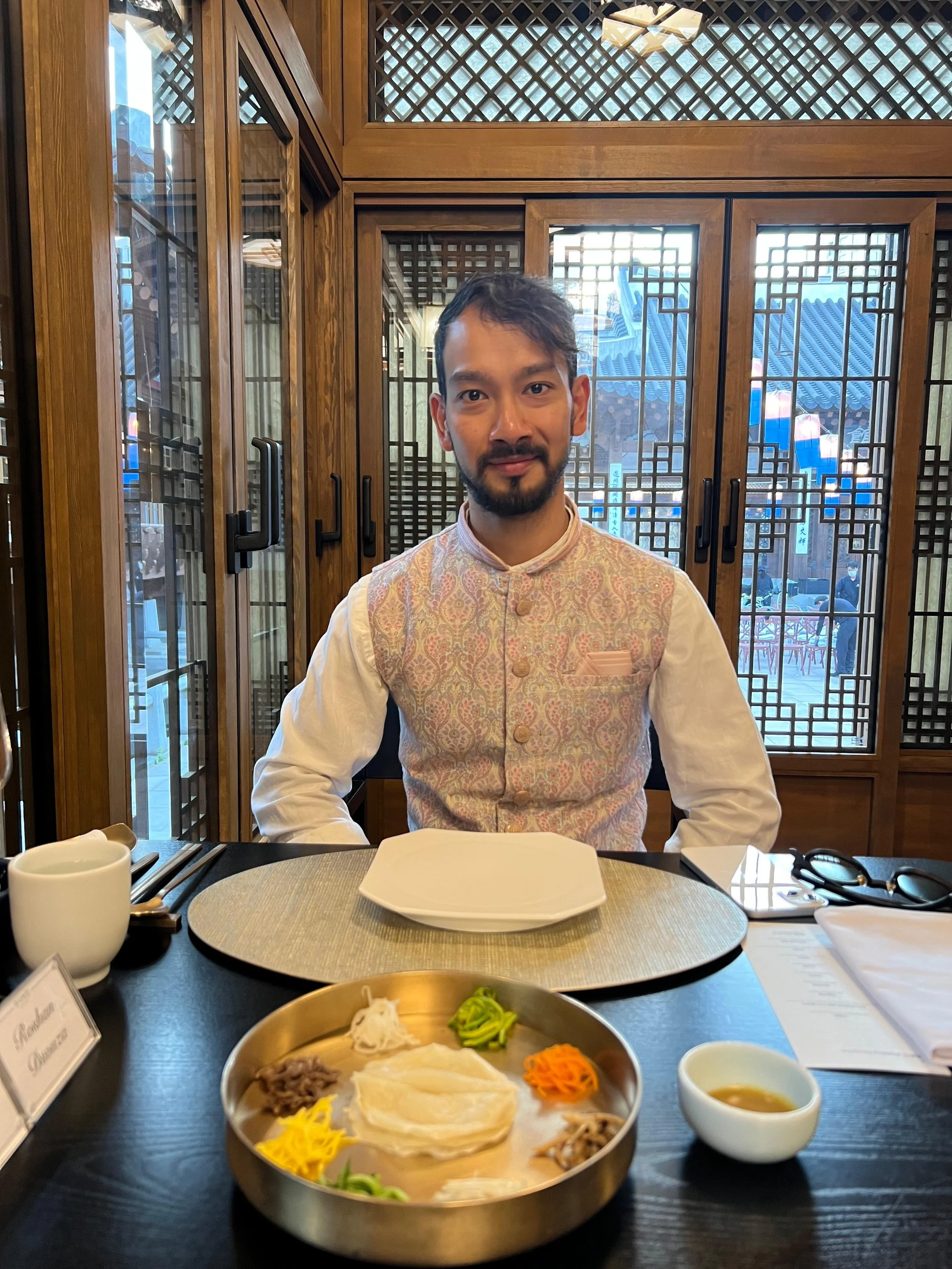
Photo credit: subject
I identify as a mixed-race, third-culture kid of Luso-Indian, Chinese, and Nepalese descent. I was born in Oman, raised in India, and moved to the UK at the age of 12. I speak English, Nepalese, and Hindi fluently, while my Bengali and Mandarin are at a conversational level. My dad is Catholic, and my mum was born Hindu before converting to Catholicism after meeting my dad. Religion, nationality, and ethnicity have all played a big part in the way my older brother and I identify ourselves.
This is the interesting part where the lines between ethnicity and nationality blur. Both my parents were born in India, but the historical context that shaped their backgrounds also influenced how my older brother and I viewed our place in the world. My father, Neville, was born to a Luso-Indian (mixed Portuguese and Indian) father from Goa and a third-generation Indian-born Chinese mother from Kolkata (formerly known as Calcutta). He was raised Catholic. Goa was a former Portuguese colony in India for over 450 years until it was annexed by India in December 1961. My mother, Shanti, is an Indian Gorkha hailing from Darjeeling in the state of West Bengal, India. She speaks Nepali and is of the Limbu people, an ethnolinguistic group indigenous to the Himalayan region of eastern Nepal, northeastern India, and western Bhutan. Indian Gorkhas have been marginalised and discriminated against for decades, frequently misidentified as foreign nationals or migrants from Nepal despite being legal Indian citizens.
My mum and dad used to frequent the discotheques in 1980s Kolkata. They met in the city as friends when she was trying to set him up on blind dates; eventually, they fell for each other and got together.
I never met my paternal grandparents, and my maternal grandparents passed away when I was two, so I grew up without having grandparents in my life. A lot of the stories, therefore, were filtered through the lens of my mum and dad. I do know my dad’s side of the family was okay with their relationship, but my mum’s side genuinely thought she had lost the plot and was about to marry a criminal! My mum was the first in her family to marry outside her Limbu and Nepalese community. It reached a point where my maternal grandmother went to the local priest to pray for her daughter, as she was convinced my mum was not in the right state of mind! My maternal grandfather then had to send my uncle to make sure my dad wasn’t a problematic individual. Once they met him, though, it was fine and ended up working out despite the language barrier. Over the years, their love and tolerance for each other’s cultures has instilled a strong sense of acceptance in me and my brother for all types of cultures, castes, and beliefs.
I find I am closer to my Nepalese side as I grew up with my mum’s extended family in Darjeeling, India. I’m especially close to my Nepalese cousin sister who is two years younger than me, and it was with her that I spoke Nepalese, ate Nepalese food, and experienced Nepalese Hindu festivals like Dashain and Tihar. After having me in Oman and bringing me back to India, my mum was in and out of the country due to work until I was five years old. It was my maternal grandmother who suggested my mum move back so her two boys didn’t feel the presence of an absent mother, so I relied on my extended family for comfort a lot of times. I must say, though, that my upbringing in a fairly religious Catholic household meant that part of my identity was also tied intrinsically to my dad. We observed Lent, Easter, and Christmas not as secular festivals, but as religious ones. I also never met a single family member on my dad’s side until I was 28, so growing up there was a distinct lack of Portuguese and Chinese family members in my life. My dad was closer to his Chinese side, and so it was reflected in the delicious Cantonese food that he used to make. My late grandmother’s own grandparents fled modern-day Guangdong province in Southern China and arrived at the port of Calcutta in the early 1900s—a fascinating odyssey in search of a better life. In time, I have found ways to identify with the other cultures of my identity through cooking, reading history books, and watching documentaries. I know that I will never fully be able to assimilate into them, but learning more about my roots has given me a sense of closure.
As a mixed-race child, I just knew I never felt Portuguese, Indian, Chinese, or Nepalese enough. It was this weird conflation that I sort of subdued and just got on with. I would get occasional comments on why my mum decided to marry a non-Nepalese man; mentions of me being a ‘half-blood’ or having ‘tainted blood’ were made. It didn’t help that Indian Gorkha Nepalis are already a marginalised community across the Indian subcontinent who feel like they don’t fit in, so I never understood why people of my own culture would project that onto someone who was half Nepalese. I must say that this usually only happened when they learned about my Portuguese surname. I generally came across as fairly racially ambiguous and fit into the mould of what a Nepalese person ‘looked’ like, so I was spared a lot of grief from afar. I knew I didn’t really fully fit in when it came to celebrating Nepalese Hindu festivals, as one could tell I never fully understood what was going on half of the time. Having then moved to the UK, I didn’t grow up in a Nepalese community or have Nepalese friends around me, so I lost that part of my culture as I started to assimilate into British society. Over the years, through a lot of self-healing, acceptance, and reconnecting with my roots through other like-minded mixed-race individuals in the UK, I have found more peace in my 30s as a mixed-race person and accept that it’s okay not to feel like I fully fit in. I take the best aspects of all my cultures and have shaped them into a hybrid that suits me just fine.
Truthfully, I have felt culturally isolated all my life, not knowing what culture to fully embrace or feeling like I was fully accepted by any community. I grew up listening to my dad talk about his experience growing up with a Chinese mother, and I have always connected to my paternal grandmother on a spiritual level despite never meeting her. In fact, I dedicated a Year 13 film project in sixth form to her called ‘ROOTS’, and when I turned 20 in 2016, I decided to spend a six-month university semester studying and travelling in China to connect with the Chinese side of my heritage. It remains one of the most gratifying experiences of my life, where I studied Mandarin, stayed in the houses of locals, and briefly worked as a communications intern in Guangzhou, Guangdong. There were times, of course, that I did feel isolated in China as the people there still saw me as a foreigner with part-Chinese ancestry, so I never fully found myself ingrained in the culture. Ten years later, though, I long to go back; it allowed me to find peace within myself for having fulfilled that.
As I mentioned previously, Nepalese people and many from the North East states of India face rampant discrimination and assault across India. This is an issue that predates 1947 Independence India and is the result of the Gorkhaland movement: a political movement seeking the creation of a separate state within India, which comprises the Nepali-speaking-majority areas of northern West Bengal. It is important to provide this historical context as it was the reason why I was often called ‘soy sauce’ in university by some Indian classmates at the time who came to the UK as international students. We were friends, yet I found it offensive and did request that they stop saying it, but they didn’t. Looking back, it was sheer ignorance and racism playing right in front of me, and I regret not pushing back further.
In my personal experience, I have experienced more direct racism in India than in the UK. In 2018, I remember queuing up for snacks at a cinema in Delhi. There was a woman in front of me who was being rude and aggressive towards the staff, and when I and many others behind her confronted her about it, I was targeted with hateful remarks such as ‘chinky’ and ‘go back to your country!’. At that moment, I froze. I remember thinking why I couldn’t deliver a smart response to humiliate her, but moments like that can either make you react immediately or paralyse you. It paralysed me, and that experience has stayed with me since. This issue is so common and will only get worse as more young people from Darjeeling and the North East states move to urban cities for employment opportunities and get penalised for it due to their background as being ‘alien’ or ‘other’. It’s never sat well with me and makes me want to stand up for my people and community whenever I get a platform to promote it.
Remember that you are the bridge between the two or more cultures that are inherently a part of you, so carve a sacred and unique space for yourself. There is a comfort in fully accepting that you’re likely never going to fit in fully on either side of your cultures, but you become a symbol of tolerance and acceptance for others, and you yourself are a product of that! May good things come your way! Truthfully, I have never hidden any part of my identity ever. I have tried to showcase as many facets of it, and unfortunately, it’s been external forces that have never fully welcomed me into their communities fully.
My mum is my role model. She chose to marry someone not just out of her caste, but removed from the Nepalese community altogether. She taught me tolerance, kindness, and the importance of hard work. Having moved to the UK with me and my dad to provide our family with new opportunities, she completely changed the trajectory of our lives, and I owe her everything for it.
I got called ‘half-blood’ when I was a child, and that stuck for all the wrong reasons: feelings of isolation, feeling different, not part of a community, and general frustration with society for allowing that.
I admire the inclusivity of Nigerian culture. One of my close friends is of Nigerian descent, specifically Igbo. Going to my friend’s house after church service to eat jollof rice and fish stew was a fond memory during my teenage years. We also attended church service together and he invited me to various family functions. I was always made to feel welcome. One of my other close friends is Romanian, and I have been lucky to visit Romania twice. The welcoming nature of the people, their hospitality, and their entrepreneurial mindset are also admirable.
I would first put the Nepalese khukuri in a time box. It’s a symbolic object for the Nepalese people that is emblematic of our bravery, tenacity, and fearlessness. We have one that has been a family heirloom for over a century. Food culture, especially for the Nepalese and Chinese people, is deeply intertwined with family values and guest hospitality. I would definitely put that in the time box, too! I could eat momo, selroti, thukpa, siu mai, and har gao all day every day. The love for history, discovery, and learning that the Luso-Indians from Goa have for their Portuguese ancestry has rubbed off on me. They have such a strong connection and affinity to their past, and it’s reflective in them preserving their unique Indo-Portuguese customs and language despite the Indian annexation of Goa in 1961.
I’m a communications professional, writer, and researcher working in the built environment and heritage sector. It’s an industry that suffers from a severe lack of diversity. As such, mixed-race people, or people of colour for that matter, aren’t properly represented. However, I have never let that define me or hamper my expectations. Quite frankly, I don’t care if senior leadership recognises me as having mixed heritage. Instead, I have used it to my advantage and carved a niche space for myself. It’s allowed me to advocate for better ethnic minority representation within the profession through my teaching work with local schools as well as partnering with outreach organisations that support young people with employability skills. I’m passionate about lecturing on race and identity, career prospects, and social mobility that empower young people to dream bigger.
Life in corporate London can be thrilling but exhausting at the same time, where you can very quickly get stuck in a monotonous routine. So I always try to incorporate food as a way to retain my connection to my cultures. I must say my Indian meals are less than stellar, so it’s usually my Chinese cuisine skills that are up to par! I still observe Lent and Christmas as religious periods and occasionally go to church—it’s part of the Portuguese Catholic upbringing I can never part with. Not being around a Nepalese community in the UK and also away from my family means that I now miss many important family moments and festivals, but I always look forward to them whenever my schedule allows me to go back home to Darjeeling and spend time with them.
I am currently learning more about the history of my mother’s tribe, the Limbu people. Having migrated to Darjeeling in the early 19th century, they have managed to preserve and retain their unique language, customs, and traditions. I am quite excited to explore this undiscovered part of my identity through research and eventual interviews with local people. I also intend to deepen my future research on the Luso-Indian community in Goa and the Chinese-Indian community in Kolkata.
Also, having met my now wife in university and learning about her upbringing as a British Gujarati with ancestral roots in India, Uganda, and Zimbabwe, I have found acceptance and peace with the Indian part of me that always wrestled with feeling like an outsider every time I went back home to Darjeeling. Her Gujarati culture grounds me to experience other aspects of the Indian diaspora through weddings and festivals, which I never experienced growing up. I hope our future children have an easier time assimilating culturally wherever they decide to go in the world.